

EU AI Act · Articles 22 and 54

EU AI Act Authorised Representative Services

Planning to bring a high-risk AI system or a general-purpose AI model to the EU? Conregia GmbH helps providers established outside the EU assess their appointment requirement, prepare their documentation and define a written mandate for representation from Germany.

For AI developers, software providers and manufacturers of AI-enabled products.

European Union flag against a blue sky

When do you need an EU AI Act representative?

Start with the provider’s place of establishment, what is supplied to the EU, the system’s intended purpose and the applicable date. The AI Act sets separate appointment rules for high-risk systems and general-purpose AI models.

Illustration of a purple digital brain with a green network graphic

High-risk AI systems · Article 22

A third-country provider must appoint an EU-established authorised representative by written mandate before making a covered high-risk AI system available on the EU market, once the applicable rules apply.

  • for high-risk use cases under Article 6(2) and Annex III, such as certain recruitment systems. Article 6(3) provides a limited exception for certain uses that pose no significant risk. Annex III systems that profile natural persons are always high-risk.
  • for the Article 6(1) product route where Article 22 applies, including qualifying medical devices under Annex I, Section A. The AI must itself be a covered product or be a safety component of one, and the relevant product must require qualifying third-party conformity assessment. A component used solely for non-safety functions can fall outside the safety-component definition. A component whose failure or malfunction would endanger health and safety is treated as safety-related. Annex I, Section B has a separate regime under Article 2(2).


General-purpose AI models · Article 54

A third-country provider must appoint an EU-established authorised representative by written mandate before placing a covered general-purpose AI (GPAI) model on the EU market. Chapter V has applied since . Providers of models placed on the market before that date have until under Article 111(3).

Article 54(6) exempts qualifying free and open-source models if the licence allows access, use, modification and distribution and the required parameters, including weights, architecture and usage information, are public. GPAI models with systemic risk remain subject to Article 54.

For high-risk systems already placed on the market or put into service before the relevant application date, check Article 111(2). Significant design changes after that date can bring a system into scope. Special rules apply to systems intended for use by public authorities and to certain large-scale IT systems.

What Conregia does under a written mandate

Conregia reviews the provider, the system or model and the available evidence before accepting an appointment. The provider must enable Conregia to perform its mandated tasks, including by giving it timely access to the required records and a responsible technical contact.

Article 22 mandate for high-risk AI systems

  • Verify that the provider has drawn up the EU declaration of conformity and technical documentation and completed the appropriate conformity assessment.
  • Keep the provider’s contact details, declaration, technical documentation and applicable notified body certificate available for ten years after placement on the market or putting into service.
  • Provide the mandate in the required official EU language on request. Respond to reasoned authority requests for information, including access to automatically generated logs to the extent they are under the provider’s control, and cooperate on risk reduction.
  • Handle Article 49(1) registration where applicable, or verify the specified representative details if the provider registers the system.

Article 54 mandate for GPAI models

  • Verify that the provider has prepared Annex XI technical documentation and fulfilled Article 53 and, where applicable, Article 55 duties for models with systemic risk.
  • Keep the provider’s contact details and a copy of the technical documentation available for ten years after the model is placed on the market.
  • Provide the mandate in an official EU language on request, respond to reasoned information requests from the AI Office and cooperate with the AI Office and competent authorities on model-related measures.

Authority to act and duty to terminate

The mandate authorises Conregia to serve as a regulatory contact alongside or in place of the provider. Conregia must terminate the mandate if it considers or has reason to believe the provider is breaching its AI Act obligations. Under Article 22 it must immediately notify the relevant market surveillance authority and, where applicable, the notified body. Under Article 54 it must immediately notify the AI Office. In both cases it must give the reasons.

Who is responsible in the AI value chain?

Identify each operator from its actual activities, branding and role in the supply chain. The provider retains responsibility for its own compliance duties, including conformity assessment and issuing the EU declaration of conformity for covered high-risk systems.

OperatorMain responsibilities
High-risk AI system provider
Articles 16–21, 72–73
Meet the system requirements, maintain a quality management system and technical file, complete conformity assessment, issue the declaration and affix CE marking. Handle applicable registration, post-market monitoring, corrective action and serious-incident reporting.
GPAI model provider
Articles 53–55
Meet applicable documentation and downstream information duties, maintain a copyright compliance policy and publish a training-content summary. Systemic-risk models have additional evaluation, risk mitigation, reporting and cybersecurity duties.
EU authorised representative
Articles 22 and 54
Exercise the powers and perform the verification, retention, cooperation and escalation duties set out in the relevant article and written mandate.
Importer
Article 23
Before placing a high-risk system on the market, check the assessment, documentation, marking, instructions and representative appointment where required. Hold back suspect systems until compliance is established and alert the relevant parties and authorities when the system presents a risk.
Distributor
Article 24
Verify CE marking, accompanying documents and relevant provider and importer identification. Withhold non-compliant systems and take or ensure corrective action for systems already supplied.
Deployer
Articles 26–27
Follow the instructions, assign competent human oversight, monitor operation, retain logs under its control and report relevant risks and incidents. Carry out a fundamental rights impact assessment where Article 27 requires one.
Product manufacturer or other operator
Article 25
A product manufacturer can become the provider when it places a covered product with a high-risk AI safety component on the market under its own name, or puts the AI system into service under its own name after the product is placed on the market, as set out in Article 25(3). Own-branding, substantial modification or changing an intended purpose to create a high-risk use can also trigger provider duties under Article 25(1).

Any natural or legal person with reason to believe the AI Act has been infringed may complain to the relevant market surveillance authority under Article 85. Article 86 also gives affected people a right to a meaningful explanation from the deployer for certain significant decisions based on the output of Annex III systems, subject to statutory conditions and exceptions, including the exclusion for Annex III point 2.

AI-enabled products and software

Humanoid robot with visible mechanical components

AI systems and robotics

Check the intended purpose, any safety function, applicable sector legislation and the conformity assessment route. These determine whether a robotics application falls within the high-risk rules.

Clinician operating robotic equipment beside a patient

AI-enabled medical devices and IVDs

An AI Act appointment may be required alongside a separate Article 11 appointment under the MDR or IVDR. Check the intended medical purpose, third-party assessment requirement and application date under each law.

Explore Conregia’s medical device EU-Rep services

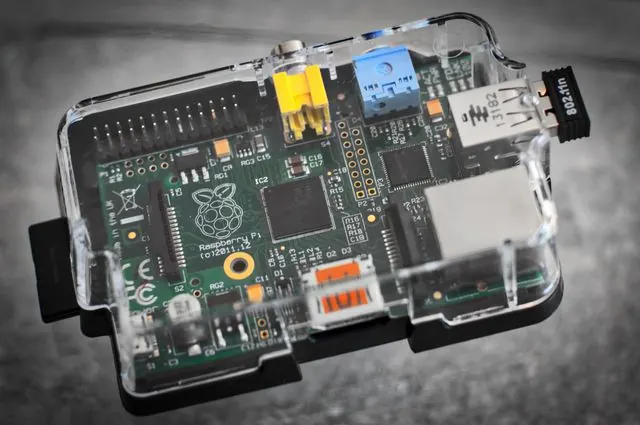
Raspberry Pi single-board computer in a transparent case

Embedded AI and connected products

Map who controls the intended purpose, releases updates and markets the finished product under their name. Review any safety function and third-party assessment requirement before deciding whether the product route applies.

From initial review to appointment

  1. Confirm scope

    Review the provider’s establishment, intended purpose, proposed classification, EU launch plan and regulatory roles.

  2. Review available evidence

    Identify the applicable documents, their status and any gaps. Agree how records, technical contacts and escalation will be managed.

  3. Agree the written mandate

    Confirm the systems or models covered, responsibilities and authority contact arrangements before Conregia accepts the appointment.

Frequently asked questions

Does a chatbot automatically need an EU representative?

Check what is being supplied and its intended purpose. A customer support chatbot may have Article 50 transparency duties, while Article 22 depends on high-risk classification and Article 54 concerns providers placing GPAI models on the EU market.

Can our MDR representative also act under the AI Act?

The same EU-established entity may be considered for both roles, subject to the relevant requirements and acceptance of the mandate scope under each law. An existing MDR appointment alone does not fulfil Article 22.

Can we start before the high-risk rules apply?

Yes. An early review can identify the applicable date and transition rules, confirm who holds each role and establish what evidence will be needed for a mandate.

Does using a third-party GPAI model make us the model provider?

Assess the model and the downstream system separately. Integrating a third-party model can make your company the provider of the resulting AI system. The Article 54 appointment duty concerns the provider that places the GPAI model itself on the EU market.

Request an EU AI Act mandate review

Tell us your company’s country of establishment, the system or model and its intended purpose, your expected EU launch date, and the current status of your classification and documentation. For an AI-enabled device, include the MDR or IVDR class and any notified body involvement, if known.